CNC Machining: What It Is, How It Works, and Why It Powers Modern Industry
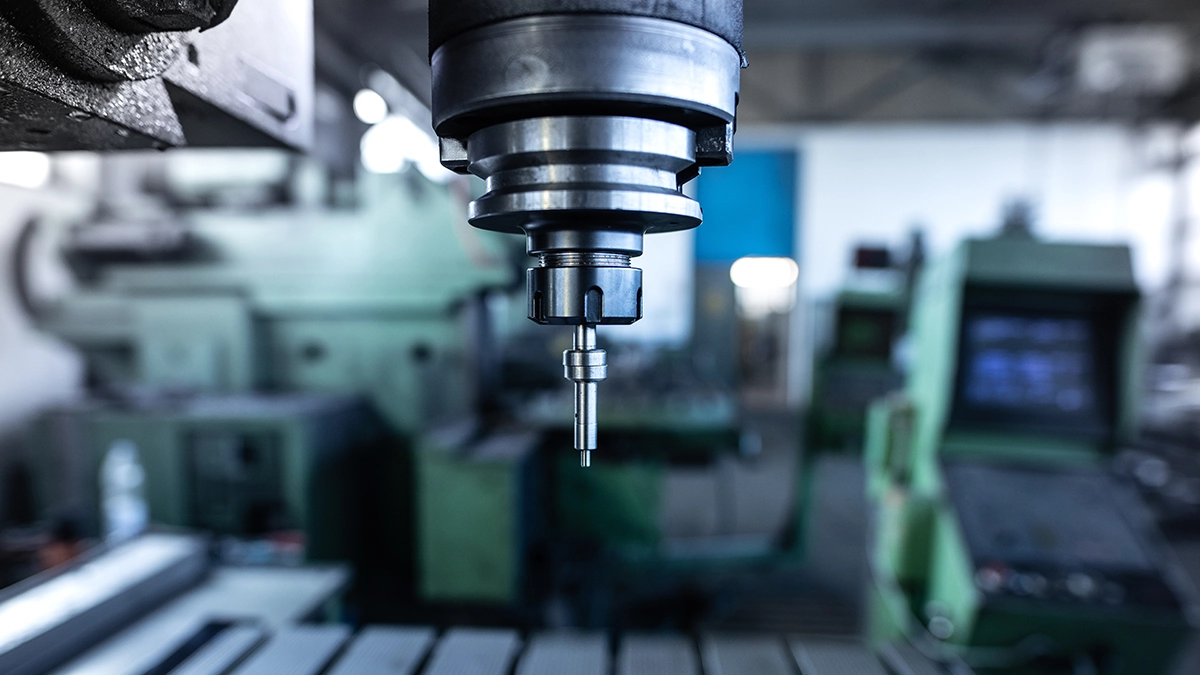
CNC machining is the technology behind aircraft parts, medical implants, and the injection mold of the most ordinary toy. In this guide we explain what CNC machining is, how metal cutting works, which materials can be machined, where its greatest advantages come from, and what determines the cost of CNC milling and turning.
What CNC machining is and where it came from
CNC stands for Computer Numerical Control. CNC machining is therefore machining in which the movements of the machine tool are directed not by an operator's hand but by a program executed by the machine's control system. The program defines the tool path, spindle speed, and feed rates, while the operator supervises the process.
This computer control is what separates CNC machine tools from conventional machines and lets modern CNC machines work faster, more accurately, and more repeatably than any human at a handwheel.
The story begins just after World War II. American entrepreneur John T. Parsons was looking for a way to manufacture helicopter rotor blades accurately and hit on the idea of guiding the tool along mathematically computed coordinates. The MIT Servomechanisms Laboratory developed the concept and in 1952 demonstrated the first numerically controlled milling machine. The following decades brought CAD/CAM integration, automatic tool changers, and five axis machining centers. Today CNC machining is of strategic importance to global manufacturing: the CNC machine market is valued at over 100 billion dollars, with forecasts of doubling within a decade.
How metal cutting works
Machining works by removing excess material from a blank, layer by layer, until exactly the shape the designer drew remains. On CNC machines the process forms a coherent digital chain: the 3D model is created in CAD, the process engineer plans the strategy and parameters in CAM, and the program goes to the machine.
Machining time can be predicted to the minute before the spindle even starts, and cutting can produce shapes no other technology can match.
Traditionally, machining divides into two families.
Cutting with defined tool geometry
The core of machining is cutting with tools of defined edge geometry, where material comes off as chips. Turning, milling, drilling, and broaching belong here, which covers the vast majority of operations performed on CNC machine tools.
Abrasive machining
In abrasive machining, the material is removed by millions of tiny grains of undefined geometry: grinding, honing, and lapping. Abrasive processes come into play where a very smooth surface finish is required or the material is too hard for a cutting edge.
Forming, heat treatment, and other technologies beyond cutting
Machining is only one of several families of manufacturing technologies. Alongside it exist metal forming (forging, stamping, and CNC bending of sheet metal), heat treatment that changes material properties, casting, and non-conventional methods such as EDM, electrochemical machining, and chemical machining.
In practice these technologies complement each other: a heat treated forging goes onto a CNC machine for its final shape and tolerances, and forming supplies blanks that cutting brings to size.
The main CNC machining methods
The main methods are turning and milling, and they differ in what rotates. In turning the workpiece rotates, which suits rotational parts, while in milling the tool rotates, producing flat faces, pockets and free form surfaces. Drilling, tapping and grinding complement them, and gantry mills and vertical turning lathes handle parts weighing tons.
The easiest way to organize CNC machining methods is by what rotates: the workpiece or the tool. These methods form the core of machining services offered by workshops.
CNC turning
In turning, the workpiece rotates and the tool removes material. CNC turning is the natural method for rotational parts: shafts, bushings, pins, and flanges. Modern lathes with live tooling can also mill slots and drill off axis holes, which reduces the number of setups.
CNC milling
In milling, the tool rotates and the workpiece moves relative to it in several axes. CNC milling produces flat faces, pockets, contours, and free form surfaces. Three axis centers cover most work, while five axis machines allow complex geometries to be machined in a single setup.
Drilling, tapping, and grinding
Seemingly simple operations can consume a large share of machining time, which we covered in our article on the most expensive minute in CNC machining. Grinding is often a separate operation on a separate machine, which translates directly into cost.
Large scale machining
A category of its own is large scale machining on gantry mills and vertical turning lathes, where the parts on the table weigh tons: machine frames, housings, energy sector components. The logistics and clamping follow their own rules, but the principle stays the same.
CNC metal machining: which materials can be machined
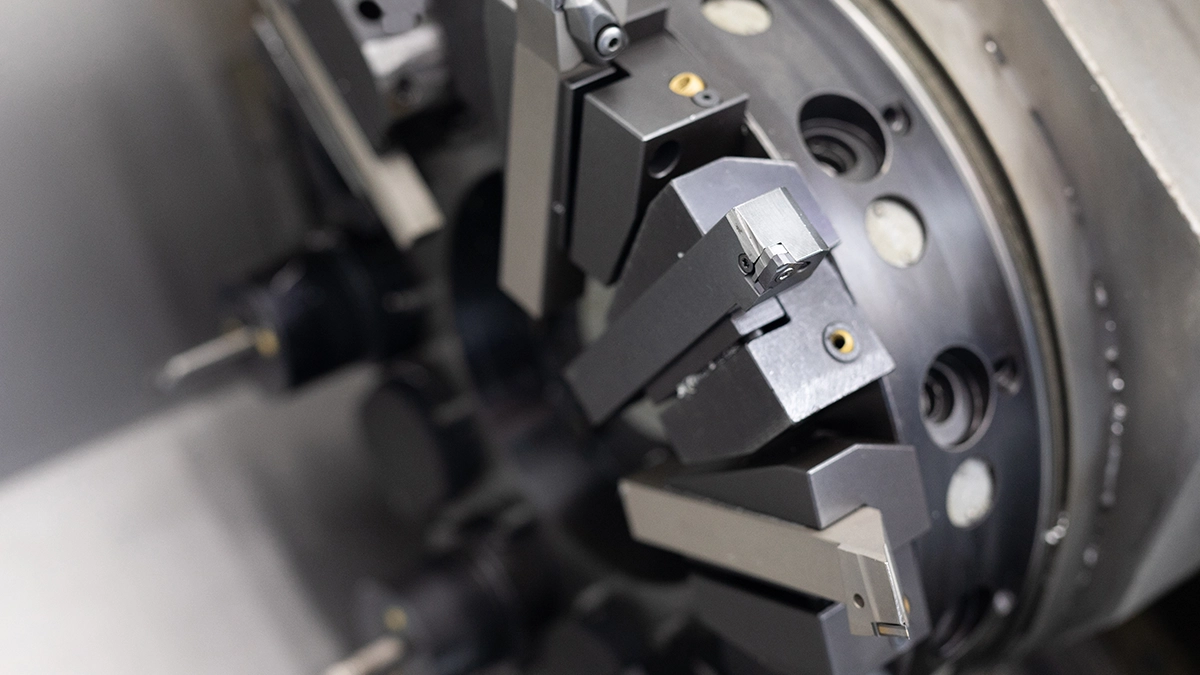
Metal cutting is the most common application of CNC technology, though machined parts are also made from plastics, composites, and wood. CNC machining covers nearly all engineering alloys, which differ in machinability, meaning how easily and quickly they can be cut, and that translates directly into time and price.
When choosing a material for CNC machining, start with the question of which properties are truly needed: corrosion resistance, strength, weight, or thermal conductivity.
Aluminum and CNC aluminum milling
Aluminum is a grateful material: light, thermally conductive, and tolerant of very high cutting speeds. CNC machining of aluminum is therefore among the fastest and cheapest, and milling alloys such as 6061 or 7075 is the backbone of the aerospace and electronics industries.
Carbon and alloy steel
Steel requires slower parameters than aluminum but remains predictable and universal. CNC machining of structural, heat treatable, and alloy steels is everyday work in any shop producing machine parts.
Stainless steel machining: the real test of a workshop
The true test of skill is stainless steel. Austenitic grades such as 304 and 316 work harden during cutting and conduct heat poorly. In practice, CNC machining of stainless steel demands rigid machines, sharp tools, and a well planned strategy: a cut that is too shallow drags the edge across the hardened layer, and heat escapes into the tool instead of the chip. This is demanding material machining in its purest form, which is why the same geometry costs more in stainless steel than in aluminum, sometimes several times more.
Why is stainless steel so widely used regardless? Because it combines corrosion resistance with strength and hygiene: the food and medical industries choose it for tanks, instruments, and implants, architecture for facade elements, and the energy sector for fittings working in aggressive environments. Where durability matters, the higher machining cost pays back over the product's life.
Turning and milling stainless steel
CNC turning of stainless steel requires stable parameters and a decisive feed so the edge cuts below the work hardened layer. Milling stainless steel follows similar rules: lower speeds, generous cooling, and cutters with sharp geometry. As a side note, copper and its alloys cut easily, titanium demands low speeds and intensive cooling, and cast iron, though dusty, is machinist friendly.
Dimensional tolerances and CNC machining accuracy
Accuracy is the trait that made industry fall in love with this technology. Precision CNC machining holds tolerances of hundredths of a millimeter in series production, and with the right machine park single micrometers are achievable. Remember, however, that precision is not free: the tighter the dimensional tolerances, the more passes, measurements, and finishing operations.
Accuracy beyond real need raises the price without raising the part's value. We cover which tolerances can safely be loosened in a separate article.
The greatest advantages of CNC technology
There are four main ones: precision of hundredths of a millimeter achievable in series, repeatability that makes the hundredth part identical to the first, automation that raises productivity without a loss of quality, and flexibility, since switching production is mostly a change of program. That is why CNC pays off for prototypes and for runs of thousands.
The advantages of CNC machining are best captured in four points:
- Precision in every piece. Accuracy of hundredths of a millimeter is achievable in series, not only in single, painstakingly finished parts.
- Repeatability of production. The hundredth part is identical to the first, because the program executes the same way every time. Repeatability is the foundation of interchangeable parts.
- Automation and productivity. CNC machine tools change their own tools and can cut through the night, while one operator supervises several stations. Productivity grows without a loss of quality.
- Flexibility. Switching production from one part to another is mostly a change of program, not a rebuild of the line. That is why CNC part production pays off for a single prototype and for a run of thousands.
In short, CNC machining offers a combination of traits no other technology provides, delivering stable quality independent of anyone's form on a given day. In fairness, modern CNC machines and CAD/CAM software are significant investments, and the result still depends on the knowledge of the process engineer. The machine executes the plan; it does not create it.
Where CNC machining is used
CNC machining serves above all aerospace, automotive, medical, electronics and machine building, as well as tool shops making injection molds. It produces light alloy and titanium components, housings and drivetrain parts, implants, enclosures and heat sinks, gears and machine tool bodies, from one off prototypes to serial production.
Machining is everywhere in industry, and it is hard to name a sector that does not rely on it.
Applications across key industries
Aerospace orders components from light alloys and titanium, automotive orders housings and drivetrain components, the medical sector implants and instruments made of stainless steel, electronics enclosures and aluminum heat sinks, and the machine building industry practically everything, from gears to machine tool bodies. CNC machining is also the daily bread of tool shops, where precision milling meets EDM in the production of injection molds. Add to that the army of subcontractors offering machining services on demand: from one off prototypes to serial production of machine parts.
What drives the cost of milling and turning
The cost of CNC machining has several layers: material (calculated from the stock, not the finished part), machine time at an hourly rate, production preparation time spread over the whole batch, and additional operations such as heat treatment or coatings.
So when someone asks what CNC milling or CNC turning costs, the honest answer is: it depends on geometry, material, tolerances, and batch size. The same part as a one off and in a batch of one hundred can differ in unit price several times over, which we explain in our article on the history of CNC quoting. The complete buyer's guide - price components, the effect of batch size, tolerances and material, plus example quotes - is our article on machining quotes.
The good news: quoting no longer has to be done by hand. In MetronQ you simply upload a CAD file, and the engine analyzes the geometry, calculates the machining time, and shows the price within a minute, broken down into components with price breaks for different quantities. Every line of that breakdown follows from the shop's own settings, as described in how the automatic quote is computed. The shop stays in control, because every quote can be approved by a technologist. The cost of the tool for a workshop is in the pricing. How fast quoting helps a shop win more CNC orders is covered separately.
Frequently asked questions about CNC machining
How does CNC machining work?
Material is removed from a blank by a cutting tool whose movements are controlled by a computer program. The result is a part whose shape, dimensions, and surface finish match the documentation. The model is created in CAD, the process engineer plans the strategy and parameters in CAM, and the program goes to the machine, where the operator supervises.
How does metal machining differ from machining plastics?
The principle is identical: excess material is removed from a bar, plate, forging, or casting until the finished shape remains. The differences lie mainly in parameters and tooling. Metals also differ from one another in machinability, meaning how easily and quickly they can be cut, which translates directly into time and price.
What are the main machining methods?
The basic division is cutting with defined edge tools (turning, milling, drilling) and abrasive machining (grinding, honing). In practice, several methods are usually combined in one process. In turning the workpiece rotates, in milling the tool rotates, and abrasive processes come in where a very smooth surface is needed or the material is too hard for a cutting edge.
How do I choose a material for CNC machining?
From the part's requirements: aluminum gives light weight and low cost, steel gives strength, and stainless steel gives corrosion resistance at the price of longer cutting time. Surplus properties are surplus cost. Start with the question of which properties are truly needed: corrosion resistance, strength, weight, or thermal conductivity.
How does CNC turning and milling of stainless steel work?
Both use parameters chosen for the work hardening behavior of the material. In turning, the rotating workpiece is machined with a steady feed, sharp inserts, and generous cooling, so the edge cuts below the hardened layer. In milling, the tool rotates, and stainless steel is milled slower than aluminum, with intensive cooling, because it sheds heat poorly.
What are the greatest advantages of CNC technology?
Accuracy of hundredths of a millimeter, repeatability of production, automation, and the flexibility that lets the same machine produce a prototype and a series. CNC machine tools change their own tools and can cut through the night, while one operator supervises several stations. Switching production from one part to another is mostly a change of program.
What does CNC turning or milling cost?
The price depends on geometry, material, tolerances, and quantity. Realistic figures for single parts start at a few dozen euros for a simple turned component and grow with complexity. The cost is made up of material calculated from the stock, machine time at an hourly rate, preparation time spread over the batch, and additional operations.
How quickly can I get a price for a specific part?
With manual quoting, usually within one to several days. Automated quoting from a CAD file, as in MetronQ, shortens that to about a minute. Either way, the quote covers material, machine time, production preparation, and additional operations, and the same part as a one off and in a batch can differ in unit price several times over.
Sources
- 1.J.T. Parsons, biography in the IEEE Computer Society archive
- 2.Fortune Business Insights, "CNC Machine Market Size Report"
- 3.M. Lembersky (ed.), "Realistic Cost Estimating for Manufacturing", 3rd ed., SME, 2016
- 4.R. Wołk, "Normowanie czasu pracy na obrabiarkach do obróbki skrawaniem", WNT, Warsaw 1972
- 5.G. Mauthner et al., Procedia CIRP 118 (2023).
Read next
Automatic CNC machining quotes
Priced from the 3D model or the drawing, on your machines and your rates. You just approve it. 14 days free, no card.
Create a free account