CNC Quoting
From 1972 Time-Norm Tables to Algorithms. Why CNC Quoting Still Works Like It Did Half a Century Ago
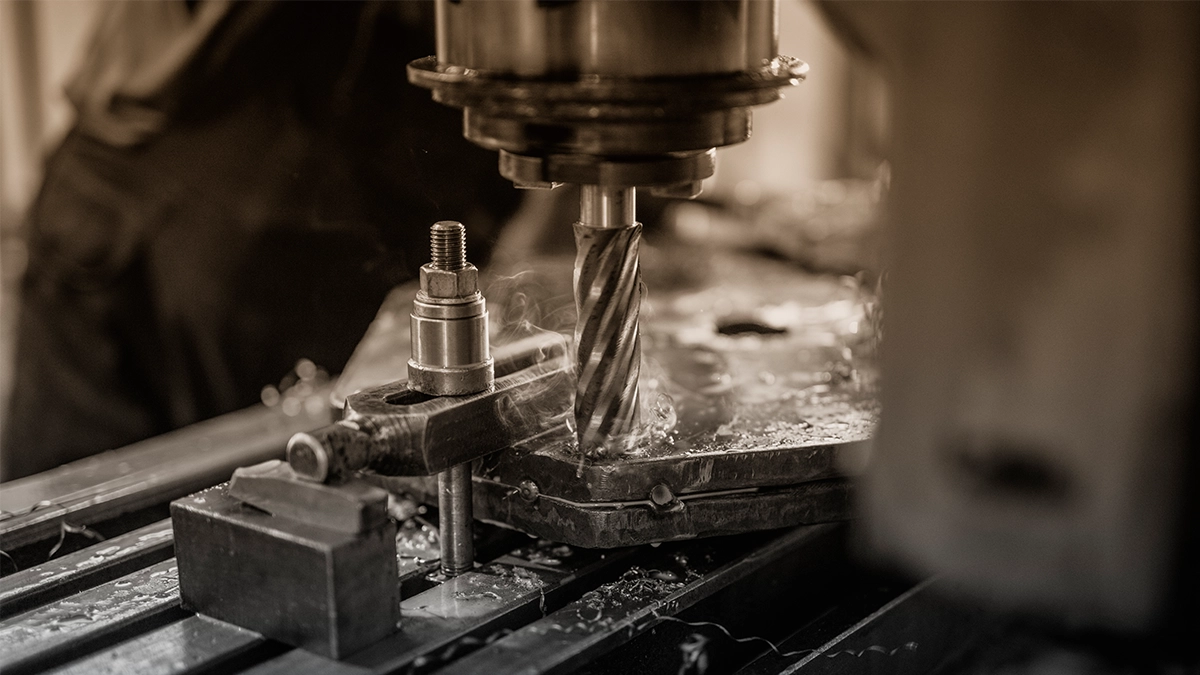
The science of machining time estimation was solved decades ago. The problem was never a lack of knowledge - it was the cost of applying it. This article is about why quoting became the last manual task in the CNC shop, and what happens when it finally stops being one.
1972, a process engineer's desk
In 1972, the Polish scientific publisher Wydawnictwa Naukowo-Techniczne released a book that some process engineers in Poland still remember today: "Normowanie czasu pracy na obrabiarkach do obróbki skrawaniem" ("Time Norms for Work on Metal-Cutting Machine Tools") by Dr. Romuald Wołk. Over five hundred pages of tables and guidelines: engine lathes, turret lathes, multi-spindle automatics, drilling machines, milling machines, planers, grinders. For every machine group, a complete set of norm data for calculating how long an operation will really take.
The method Wołk describes is called the analytical-calculation method, and it works like this. The engineer breaks the operation down into machining steps. For each step, cutting conditions are selected from the tables - speed, feed, number of passes - accounting for the material, the tool, and the economic tool life. From this, the base machining time tg is calculated: the time the tool actually spends cutting. Then, from further tables, come the auxiliary time tp (clamping and unclamping the part, changing cutting conditions, in-process measurement) and the setup time tpz for the whole batch. The sum, with allowances, gives the time norm for the operation.
This is solid, proven engineering. It has just one flaw: it is expensive to use. Working through one non-trivial part with this method takes hours of a skilled engineer's time. For an RFQ with three line items, of which the customer will order one or none, few shops can afford it. So parts get quoted by eye, from experience. Sometimes accurately. Sometimes 40% too low - and the shop pays to make the part. Sometimes 40% too high - and the job quietly goes to a competitor.
The physics has not aged
It is worth saying plainly: the relationships Wołk's book is built on are still valid today. The link between cutting speed and tool life has been known since Taylor, at the start of the 20th century. Cutting forces and power, feed and depth-of-cut selection, splitting an operation's time into base, auxiliary, and setup components - this is what engineering schools still teach, and exactly the same decomposition sits inside every serious machining cost model built since.
What has aged are the numbers in the tables. The 1972 norms were calibrated for high-speed steel, early carbides, and the machine park of that era. Today's coated inserts cut several times faster, and CNC has completely changed the proportions of auxiliary time. The model survived; the coefficients drifted. Keep that thought - we will come back to it.
Everything around quoting got automated
Over fifty years, automation has been steadily taking manual work off the process engineer's desk - all of it except one task.
First, programming. As early as 2008, the trade press was covering CAM systems with automatic feature recognition (feature-based machining): software that analyzed the part model on its own and programmed pockets, contours, bosses, and drilling routines "with minimal user input". What an engineer used to do for hours at a drawing board, and later in a G-code editor, started happening automatically.
Then, shop-floor data. Recent research - such as the architecture presented at the 2023 CIRP ICME conference by a team from TU Wien - shows systems where machine and sensor feedback is automatically linked to specific geometric features of the part via OPC UA and STEP-NC. Industry 4.0, digital twins, machines reporting their own work in real time.
And quoting? In most machine shops, quoting today looks the way it did in 1972 - except the Wołk tables have been replaced by a spreadsheet and the owner's experience. An RFQ arrives by email, waits in a queue for a day or three, someone opens the model, looks at it, estimates, replies. The customer's first contact with the shop - the moment the order decision is actually made - has remained the last fully manual task in the whole chain.
And it costs real money. Not just the engineer's time spent on calculations instead of process planning. Above all, it costs orders: a customer who sent an RFQ to five shops often buys from the first one that comes back with a sensible price. An answer after three days is frequently an answer to nobody.
What an algorithm does with a STEP file
A modern quoting engine does in under a minute exactly what the engineer with the tables did - and, at heart, in the same order.
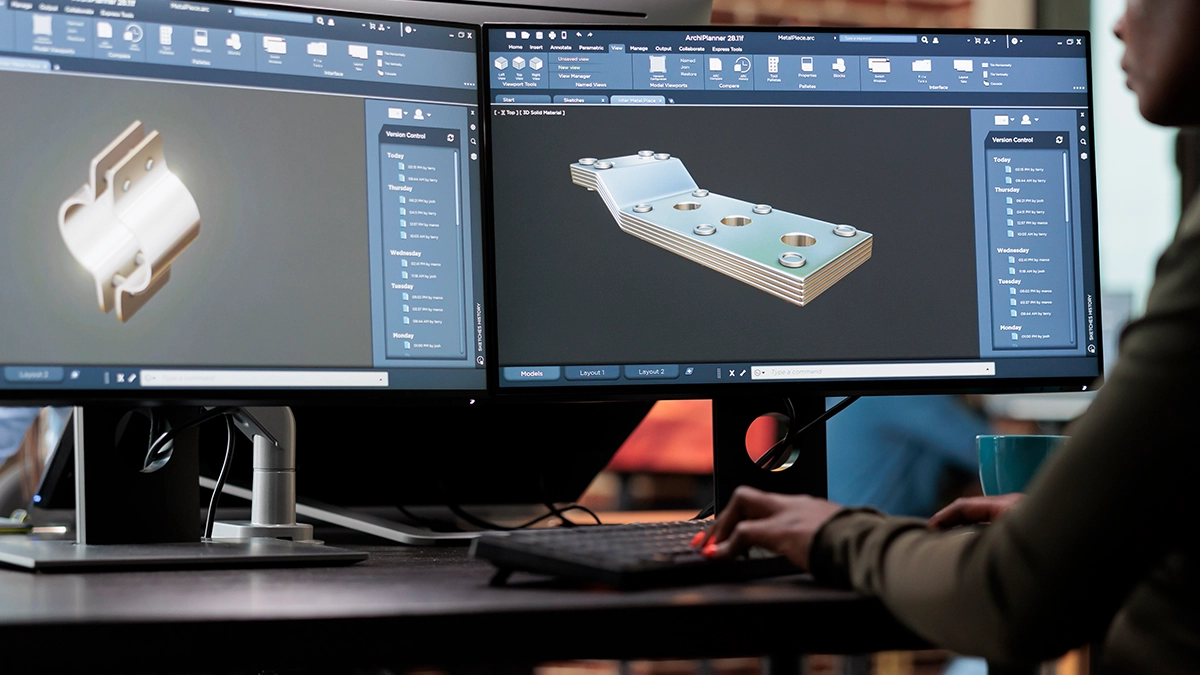
First, it reads the geometry. From the STEP file, the algorithm extracts the solid, its volume and surface area, detects holes with their diameters and depths, pockets with corner radii, thread candidates, turned parts. This is the same step in which the engineer "breaks the operation down into machining steps" - just done by a machine.
Then it computes the times. The volume of material to remove, divided by the removal rate for the given material, gives the roughing time. The surface to finish and its character (planar, rotational, freeform) give the finishing time. Every hole gets its own drilling time based on diameter and depth. This is the base time tg, computed from the same physical relationships that stand behind the 1972 tables.
Finally, it adds what Wołk called the setup time: machine setup driven by part complexity and the number of clampings, CAM programming, first-article inspection - spread across the batch. Tolerance classes and surface finish act as time multipliers, exactly in the spirit of the old norms. Add material calculated from stock, heat treatment and coatings, margin. Out comes a price - in a minute, not in hours. Each of those steps is laid out in how an automatic CNC quote is computed.
Designed by Magnific
Wołk saw it coming: the coefficients must be measured in your own shop
In the introduction to his book, Wołk did something that looks almost prophetic from today's perspective. He deliberately left out the norms for the supplementary time tu, writing that they depend on the organizational and technical condition of each individual plant and "should be developed individually by each plant, based on observation of the working day".
In other words: the model is universal, but the coefficients are local. Every shop has different machines, different rates, different organization, different habits. A table that does not know your shop will always be off.
This is exactly the principle behind calibration in MetronQ. The engine does not arrive with rigid norms that once suited someone somewhere. Instead, it fits its coefficients - the effective rate and setup times - to the historical quotes of a specific shop: it takes parts you have already priced your way and learns to price the way you do, only faster. Wołk told every plant to determine its own tu from observing the working day. We tell the engine to determine it from your own prices.
The machine calculates, the technologist decides
There is one more thing that fifty years of time-norm history teaches with full clarity: no table and no algorithm replaces the judgment of an experienced engineer where the part is unusual. Thin walls, deep holes, slender shafts, weldments and castings, geometries at the edge of manufacturability - these are the cases where the automation should be able to say "I don't know, let a human look at this".
That is why the sensible working model is not full automation but automation with approval. The engine analyzes the geometry, calculates the price, and prepares the full cost breakdown, while the technologist reviews the result and makes the call before the customer sees it. Parts with risky features - a thin wall, a deep hole, an unusual geometric signature - are routed to review automatically, regardless of what the calculation says. The human does not leave the process. Only the role changes: from calculating to judging.
And that may be the best punchline of this story. Less has changed since 1972 than you might think - the tables still exist, they have just moved from the shelf above the desk into software, and a machine now does the page-flipping. The engineer does what they have always done best: looks at the part and judges whether it was priced right. It just takes a minute instead of an hour - and the customer gets an answer the same day, not three days later. That is how quoting in MetronQ works, but whatever the tool - if RFQs in your shop are still queuing up for one person with a spreadsheet, that is probably the most expensive queue in the company.
PS If you want to check what getting rid of that queue costs - have a look at the pricing.
And what concretely builds a part's price today - material, batch, tolerances, secondary operations - is covered from the buyer's side in our guide to machining quotes.
Sources
- 1.R. Wołk, "Normowanie czasu pracy na obrabiarkach do obróbki skrawaniem", Wydawnictwa Naukowo-Techniczne, Warsaw 1972
- 2."Feature-Based Machining - Mastercam/CNC Software", Modern Machine Shop, March 2008
- 3.G. Mauthner et al., "Industry-Oriented System Architecture for Feature-Based Data Management in CNC Machining Processes", Procedia CIRP 118 (2023), pp. 157-162
Read next
Automatic CNC machining quotes
Priced from the 3D model or the drawing, on your machines and your rates. You just approve it. 14 days free, no card.
Create a free account